
- Getting Started
- Request Pathway Services
- Clinical Pathways
- …
- Getting Started
- Request Pathway Services
- Clinical Pathways
- Getting Started
- Request Pathway Services
- Clinical Pathways
- …
- Getting Started
- Request Pathway Services
- Clinical Pathways
- Getting Started
- Request Pathway Services
- Clinical Pathways
- …
- Getting Started
- Request Pathway Services
- Clinical Pathways
- Getting Started
- Request Pathway Services
- Clinical Pathways
- …
- Getting Started
- Request Pathway Services
- Clinical Pathways
Request Pathology Consultation Services
Specialized pathology expertise connecting advanced diagnostics with meaningful clinical interpretation and patient care.
Traumatic Brain Injury Clinical Pathway
Select from the available consultation services below to initiate a request under the Traumatic Brain Injury Clinical Pathway.

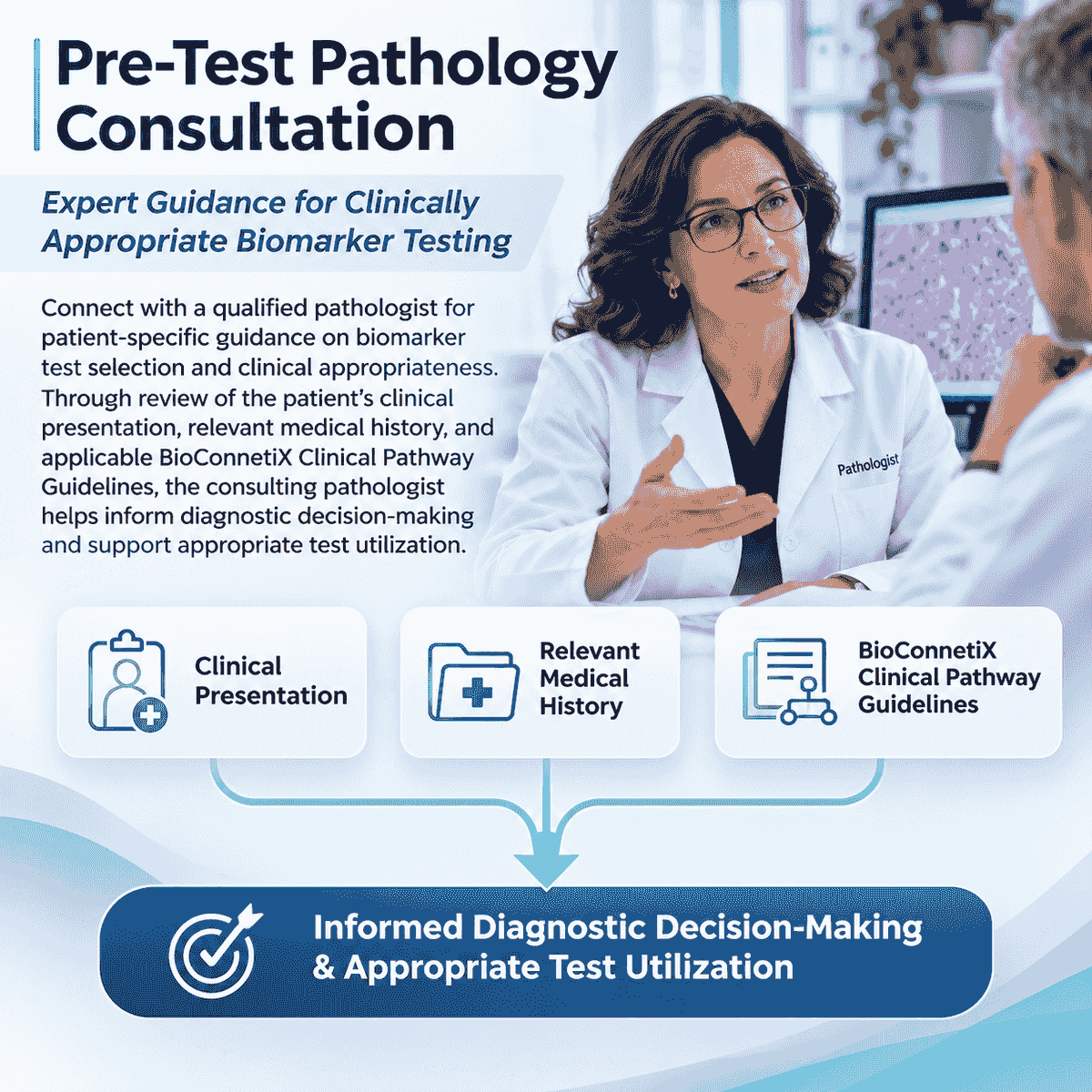
Pre-Test Pathology Consultation
Expert Guidance for Clinically Appropriate Biomarker Testing
Connect with a qualified pathologist for patient-specific guidance on biomarker test selection and clinical appropriateness. Through review of the patient's clinical presentation, relevant medical history, and applicable BioConnetiX Clinical Pathway Guidelines, the consulting pathologist helps inform diagnostic decision-making and support appropriate test utilization.
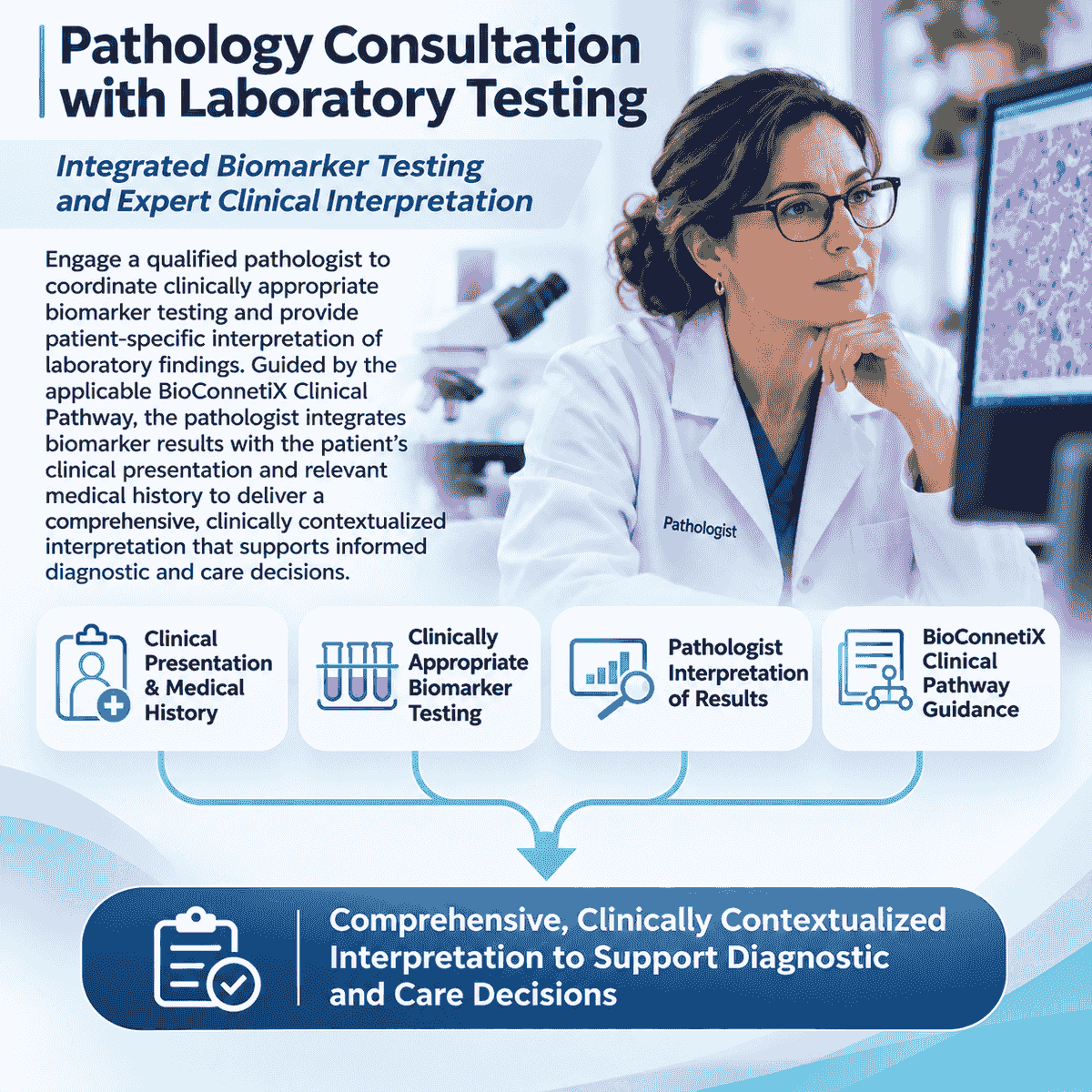
Pathology Consultation with Laboratory Testing
Integrated Biomarker Testing and Expert Clinical Interpretation
Engage a qualified pathologist to coordinate clinically appropriate biomarker testing and provide patient-specific interpretation of laboratory findings. Guided by the applicable BioConnetiX Clinical Pathway, the pathologist integrates biomarker results with the patient's clinical presentation and relevant medical history to deliver a comprehensive, clinically contextualized interpretation that supports informed diagnostic and care decisions.
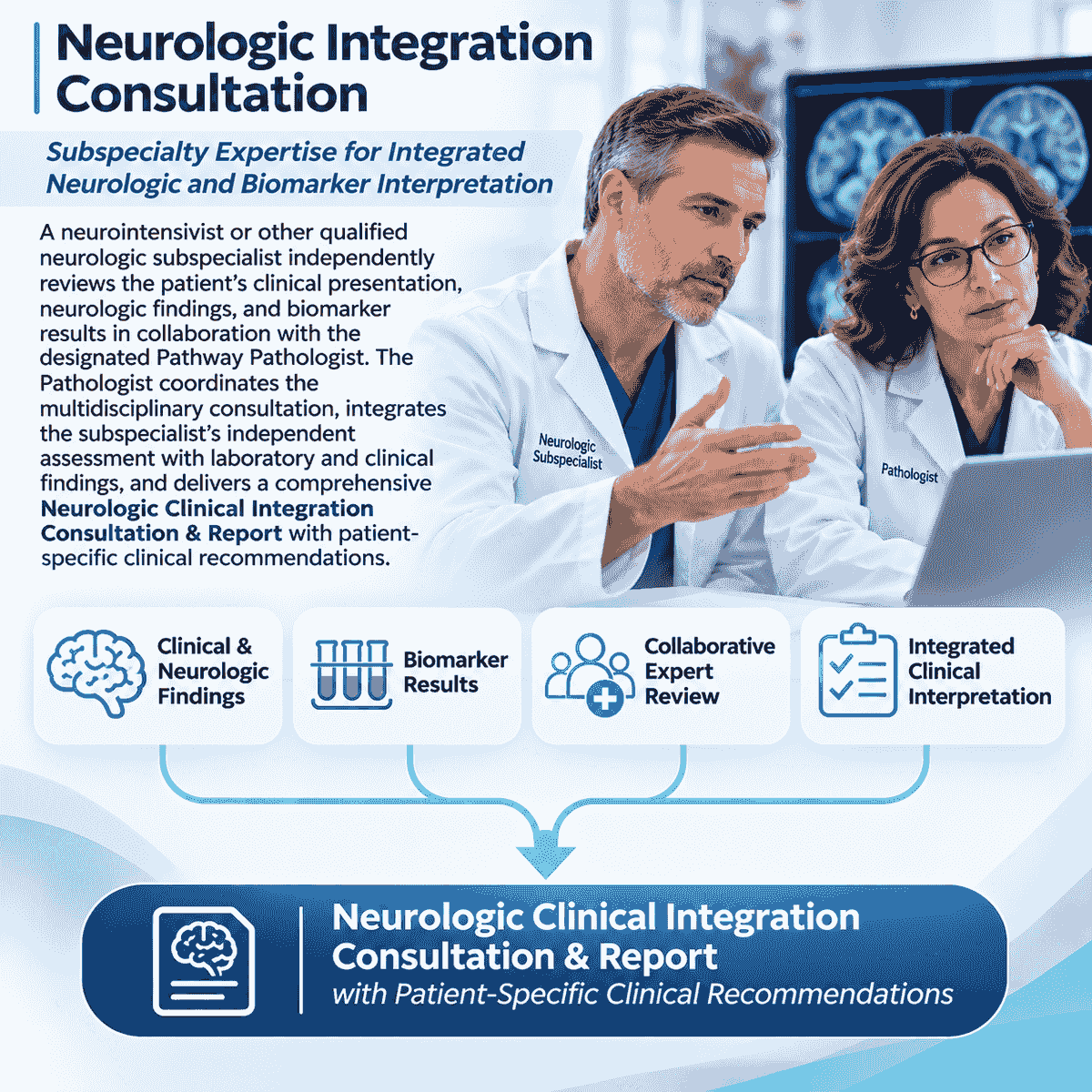
Neurologic Integration Consultation
Subspecialty Expertise for Integrated Neurologic and Biomarker Interpretation
A neurointensivist or other qualified neurologic subspecialist independently reviews the patient's clinical presentation, neurologic findings, and biomarker results in collaboration with the designated Pathway Pathologist. The Pathologist coordinates the multidisciplinary consultation, integrates the subspecialist's independent assessment with laboratory and clinical findings, and delivers a comprehensive Neurologic Clinical Integration Consultation & Report with patient-specific clinical recommendations.
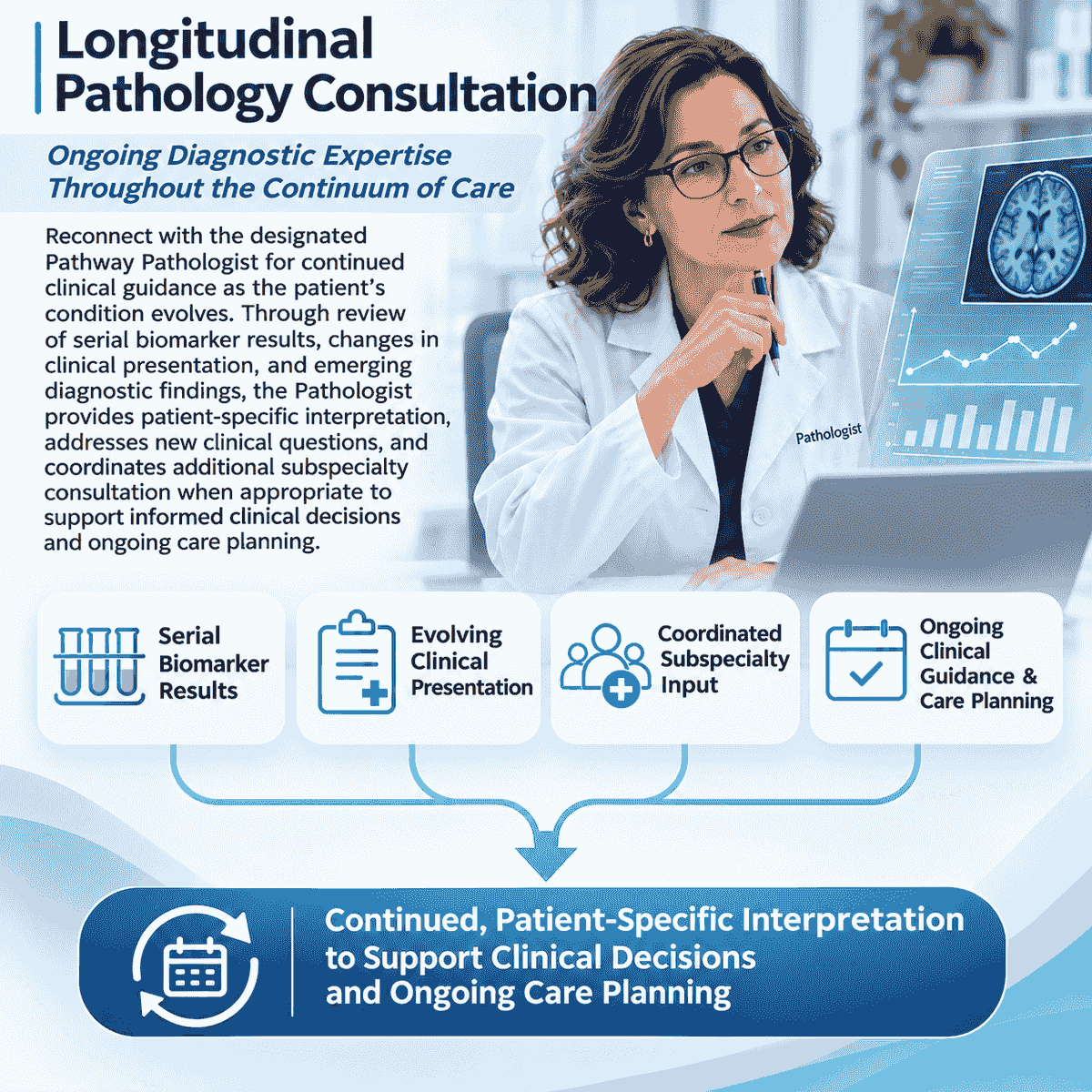
Longitudinal Pathology Consultation
Ongoing Diagnostic Expertise Throughout the Continuum of Care
Reconnect with the designated Pathway Pathologist for continued clinical guidance as the patient's condition evolves. Through review of serial biomarker results, changes in clinical presentation, and emerging diagnostic findings, the Pathologist provides patient-specific interpretation, addresses new clinical questions, and coordinates additional subspecialty consultation when appropriate to support informed clinical decisions and ongoing care planning.
Traumatic Brain Injury (TBI) Clinical Pathway: How it Works
Each patient is assigned a designated Pathway Pathologist who serves as the Primary Pathway Clinician (PPC), providing a central point of clinical coordination throughout the diagnostic process. The Pathologist reviews laboratory test orders for consistency with evidence-informed Pathway Guidelines, coordinates testing with aligned laboratories, and provides patient-specific interpretation of biomarker findings.
Unlike laboratory reporting alone, the Pathologist's clinical assessment integrates biomarker results with the patient's injury history, clinical presentation, relevant medical conditions, and available diagnostic findings to help the Treating Provider understand their clinical significance.
For complex cases, the Pathologist coordinates multidisciplinary consultation with neurologic and other clinical subspecialists, integrating their independent assessments into a comprehensive Clinical Integration Consultation & Report.
Pathology consultation remains available as the patient's clinical needs evolve, supporting additional diagnostic questions, longitudinal biomarker interpretation, and ongoing care planning.
Our objective is to make specialized diagnostic expertise accessible throughout the continuum of care – supporting informed clinical decisions without disrupting the Treating Provider's relationship with the patient.
© 2026 BioConnetiX


